Teysuno® is indicated in adults1:
• For the treatment of advanced gastric cancer when given in combination with cisplatin.
• As monotherapy or in combination with oxaliplatin or irinotecan, with or without bevacizumab, for the treatment of patients with metastatic colorectal cancer for whom it is not possible to continue treatment with another fluoropyrimidine due to hand foot syndrome or cardiovascular toxicity that developed in the adjuvant or metastatic setting.
This slide deck focuses on the clinical evidence supporting the use of Teysuno® in metastatic colorectal cancer (mCRC).
For prescribing information and details on the licensed use of Teysuno® in advanced gastric cancer, please refer to the Teysuno® SmPC or contact the Nordic Pharma Oncology team at oncology@nordicpharma.com.
1. Teysuno SmPC
UK-TEY-2600004
Date of preparation: June 2026
Adverse events should be reported. Reporting forms and information can be found at www.mhra.gov.uk/yellowcard.
Adverse events should also be reported to pv.uk@nordicpharma.com.
Switching to Teysuno (tegafur/gimeracil/oteracil),
also known as S-1, in case of hand-foot syndrome or cardiotoxicity in metastatic colorectal cancer.
®
For UK healthcare professionals only
Role of fluoropyrimidines in colorectal cancer
Despite increasing heterogeneity in colorectal cancer with many subgroups being identified, fluoropyrimidines are an essential part of
This implies that survival could be compromised when fluoropyrimidine therapy cannot be continued due to toxicity
- all regimens in (neo)adjuvant setting
-
all 1st-line regimens in metastatic setting, except for immunotherapy in
microsatellite instable (MSI) tumors - many 2nd-line regimens in metastatic setting.
Cervantes et al. Ann Oncol 2023
S-1 Teysuno® (aka S-1)
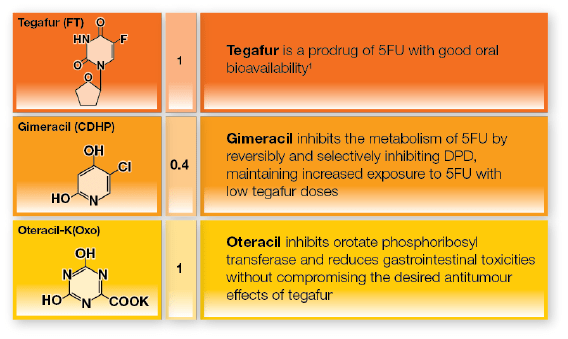
Teysuno® is an oral fluoropyrimidine, containing tegafur (prodrug 5-FU), and gimeracil and oteracil (modulators of 5-FU).
1 Inoue et al. Drug Metabolism and Pharmacokinetics 2007
5FU = fluorouracil; DPD = dihydropyrimidine dehydrogenase
S-1 Teysuno® (aka S-1) dosing1 in mCRC
- S-1 monochemotherapy (+/- bevacizumab)
30 mg/m twice daily, day 1-14, cycles of 3 weeks
- S-1 in combination with oxaliplatin or irinotecan (+/- bevacizumab)
25 mg/m twice daily, day 1-14, cycles of 3 weeks
oxaliplatin 130 mg/m2, irinotecan 150-225 mg/m2, day 1
Limited Asian data show feasibility of using S-1 in triple chemotherapy regimen2,3, and in combination with anti-EGFR agents4.
1. Teysuno SmpC 2. Kim SY, S Hong Y, K Shim E, et al. S-1 plus irinotecan and oxaliplatin for the first-line treatment of patients with metastatic colorectal cancer: a prospective phase II study and pharmacogenetic analysis. Br J Cancer 2013;109:1420-7 3. Kim SY, Hong YS, Kim BC, et al. A phase II study of S-1 plus irinotecan and oxaliplatin in heavily-treated patients with metastatic colorectal cancer. Invest New Drugs 2009;27:269-74. 4. Higami S, Mukai M, Yokoyama D, et al. A single-center retrospective analysis of the efficacy and safety of a modified regimen of irinotecan plus S-1 (IRIS) with molecular targeting agents as second-line chemotherapy in Japanese patients with recurrent or nonresectable colorectal cancer. J Gastrointest Oncol 2023;14:663-75
2
2
S-1 has comparable efficacy to other fluoropyrimidines.
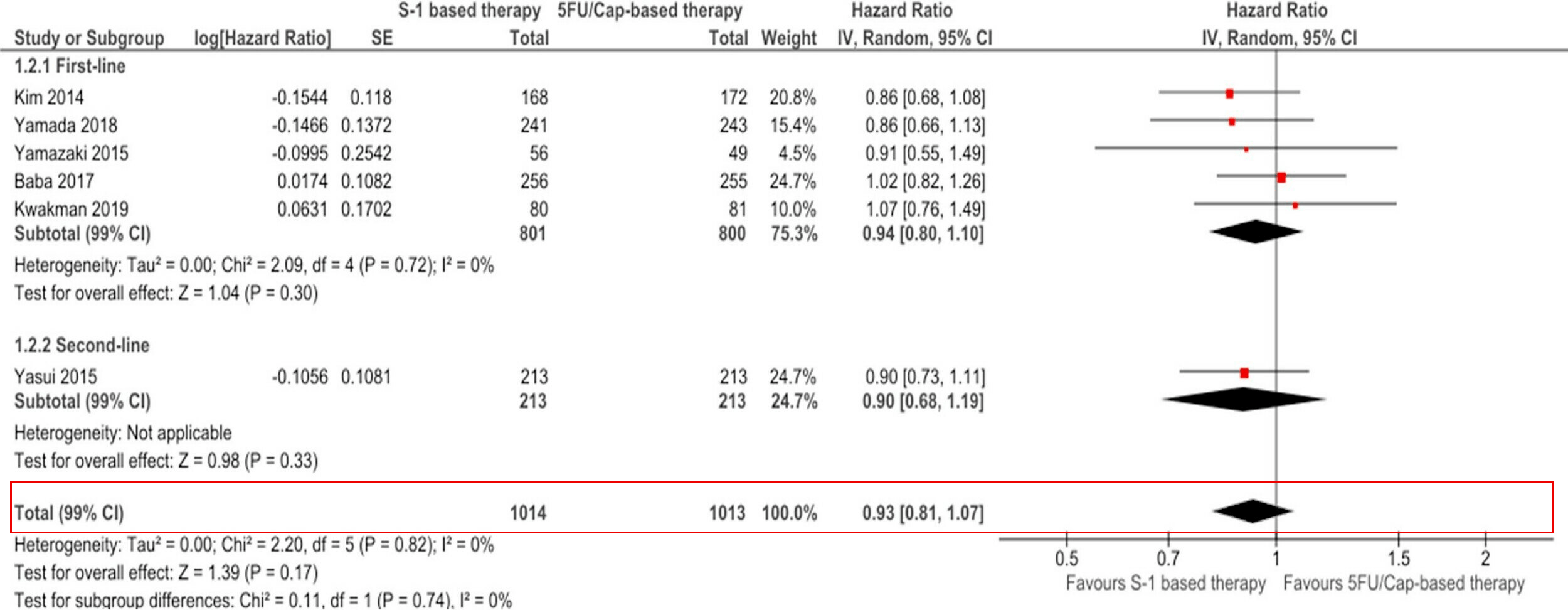
A total of 10 randomised phase II/III trials (n=2117) on S-1-based therapy versus 5-fluorouracil- or capecitabine-based therapy in the treatment of patients with metastatic colorectal cancer were analysed. Six of the studies reported PFS and OS data and 10 studies reported ORR data.
data show non-inferiority for S-1
Systematic review and non-inferiority meta-analysis
Derksen JWG et al. Eur J Cancer 2022
Forest plot for the comparison S-1-based therapy versus 5-FU/capecitabine-based therapy, outcome OS.
Derksen JWG et al. Eur J Cancer 2022
OS=overall survival; PFS=progression free survival; ORR=overall response rate
data show non-inferiority for S-1
For S-1-based treatment vs capecitabine/5-FU-based treatment in randomized phase 2/3 studies in 1st/2nd-line
treatment of metastatic CRC, non-inferiority is shown for PFS and to be at least as effective for OS and ORR.
Phase 3 SALTO trial 1st-line capecitabine vs S-1,
with or without bevacizumab, in western mCRC patients
not eligible for combination treatment.
Kwakman JJM, et al. “Phase III trial of S-1 as maintenance treatment after first-line therapy in patients with metastatic colorectal cancer (SALTO study).” Annals of Oncology. 2017;28(6):1309–1314.
Kwakman JJM, et al. Clin Colorectal Cancer. 2019;18(2):e229–e230. Updated survival results of the randomized phase III SALTO trial, comparing S-1 vs capecitabine as first-line therapy for metastatic colorectal cancer.
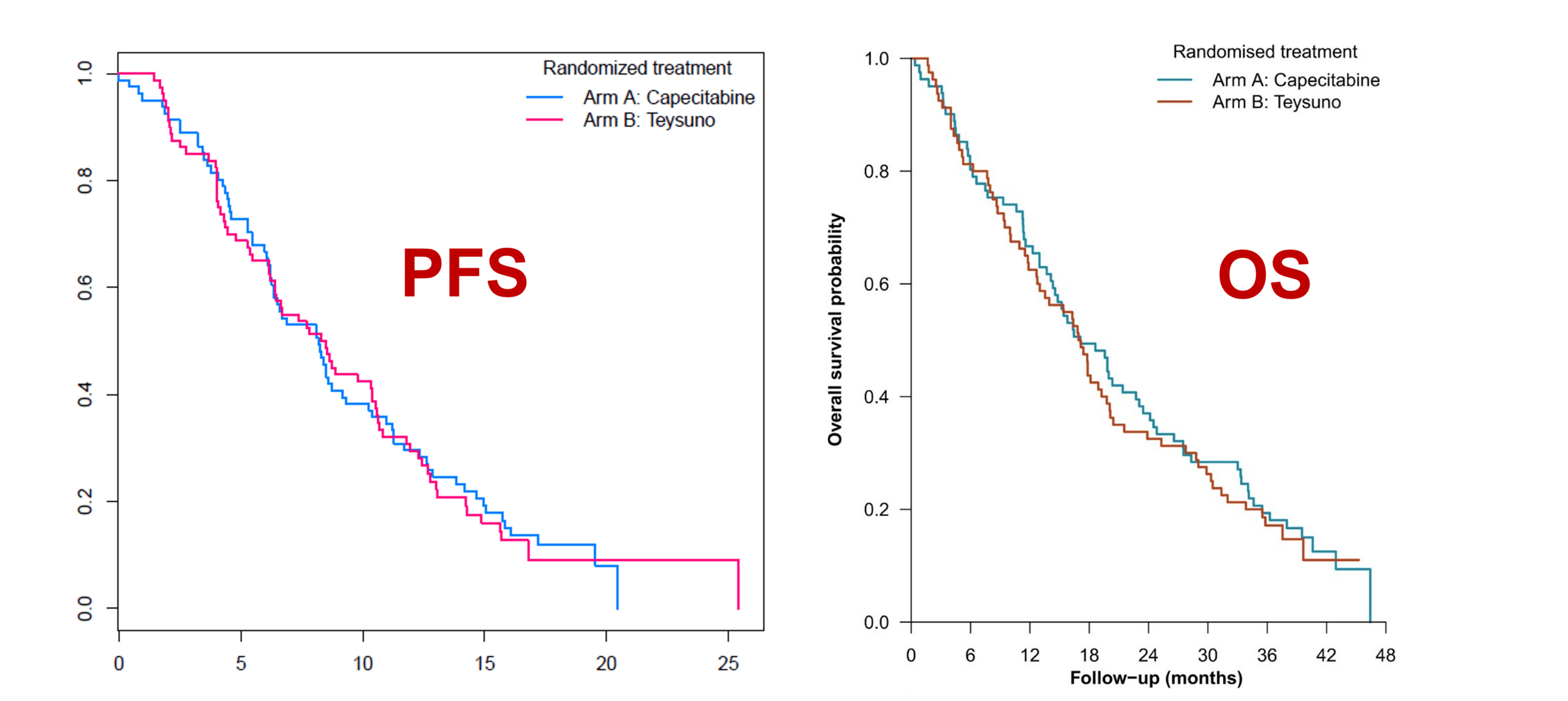
S-1 has also shown comparable efficacy in Western metastatic CRC patients.
Why use S-1?
Because it has a lower incidence of
hand-foot syndrome and cardiovascular toxicity compared to 5FU and capecitabine.
Cardiovascular toxicity (CVT)
Fluoropyrimidine-induced CVT
CVT occurs in approx. 4-6% of patients treated with capecitabine or infusional 5-FU, of whom the majority had no cardiovascular risk factors.1
1. Osterlund P et al. ESMO Open 2022; 2. Saif M et al. UpToDate 2018
Angina-like chest pain is the predominant clinical presentation, but arrythmias and myocardial infarction and even sudden death have been reported.1
Symptoms usually occur during the first or second cycle.1
Rechallenge of the fluoropyrimidine under prophylaxis may reduce, but not prevent recurrence and risk of death, and is laborious.1
No serious cardiovascular events have been reported in phase 2/3 studies with S-1.2
Switch from capecitabine to S-1 due to CVT
CardioSwitch study
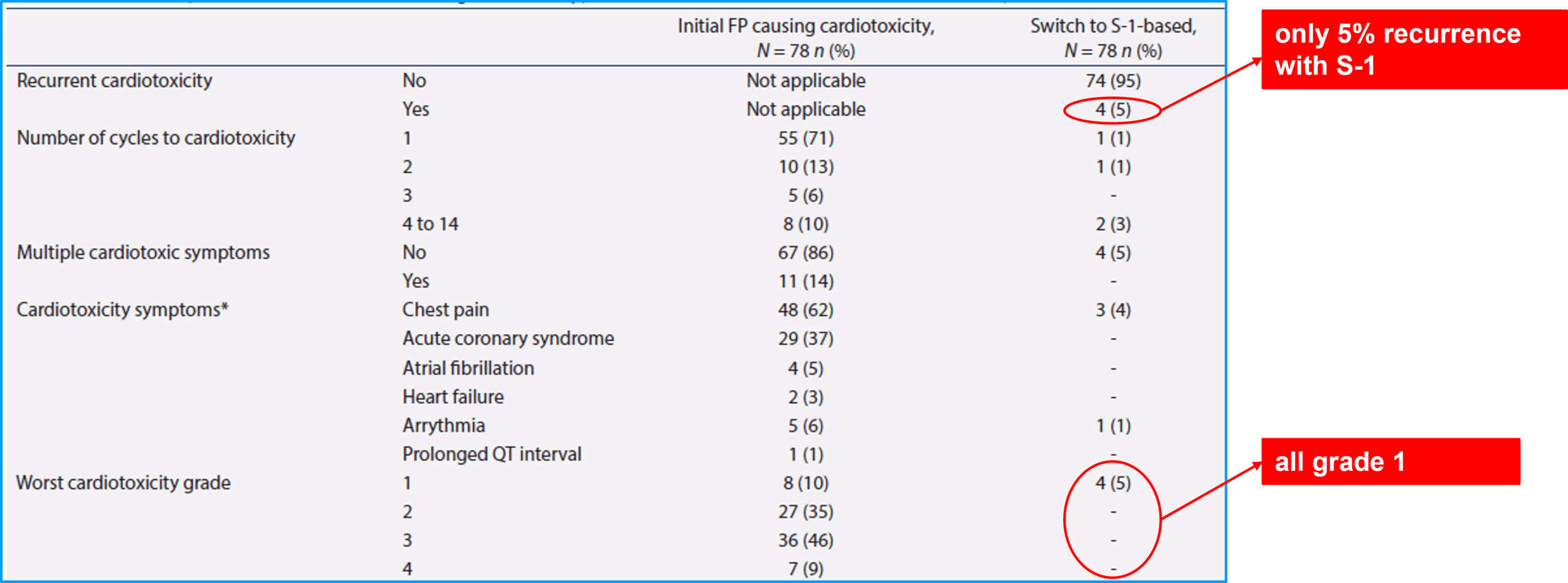
In a multinational retrospective study, 200 cancer patients with solid tumours were analyzed who experienced fluoropyrimidine-induced CVT and subsequently switched to S-1.
Osterlund P et al. ESMO Open 2022
Only 8 patients (4%) experienced recurrent CVT,
- grade 1 (6 patients)
- grade 2 (2 patients).
99% of patients (197/200) were able to complete the planned duration of treatment.
CardioSwitch:
Analysis of the subset of metastatic CRC patients
Kinos S et al. Acta Oncol 2024
77% capecitabine-based
23% 5-FU-based (deGramont [17%], Nordic bolus [6%])
65% received combination treatment, mostly oxaliplatin (62%) +/- bevacizumab
Initial FP treatment that caused cardiotoxicity
37% S-1 monotherapy (30 mg/m2 b.i.d.)
44% SOX (S-1 25 mg/m2 b.i.d.)
17% IRIS (S-1 25 mg/m2 b.i.d.)
37% also received bevacizumab
Switch to S-1-based treatment
Median age 68 years (19-85)
47% male
76% ECOG 0-1
50% without pre-existing cardiovascular comorbidity
Safety cohort: mCRC (n=78)
CardioSwitch:
Analysis of the subset of metastatic CRC patients
Kinos S et al. Acta Oncol 2024
CardioSwitch:
Analysis of the subset of metastatic CRC patients
Kinos S et al. Acta Oncol 2024
From the start of S-1-based treatment, median PFS was 9.0 months and median OS 26.7 months.
Metastasectomy of local ablative therapy was performed in all patients in whom this was planned.
S-1 can be combined with standard chemotherapy and biologic regimens and retains the full efficacy benefit of fluoropyrimidine treatment in this setting.
Conclusions
Switching to S-1 is well tolerated and feasible for patients with mCRC when they have to discontinue conventional fluoropyrimidine-based treatment due to HFS or CVT.
A switch to S-1 allows patients to continue systemic treatment that is known to significantly prolong survival, and to postpone the initiation of salvage regimens.
These data strongly support the replacement of capecitabine with S-1 in case of intolerance to capecitabine due to HFS or CVT.
Hand-foot syndrome (HFS)
Infusional 5-FU/Leucovorin-induced HFS in CRC
Protracted 5-FU infusion: incidence all grade HFS 24% (metastatic) – 72% (adjuvant)1,2
Biweekly 48h 5-FU/Leucovorin infusion: incidence grade 2-3 HFS ≤ 10%3
1. Lokich J et al. J Clin Oncol 1989; 2. Chau I et al. Ann Oncol 2005; 3. Arkenau H et al. J Clin Onol 2008
However incidence is higher in prolonged duration of treatment, such as in maintenance.
Studies of continuous and protracted infusional 5-FU/leucovorin in CRC consistently identified hand foot syndrome (HFS) as a characteristic toxicity of prolonged fluoropyrimidine exposure, with higher rates observed during continuous infusion than bolus administration, while shorter biweekly 48-hour infusion schedules were associated with a lower incidence of HFS.1-3
Capecitabine-induced HFS in metastatic CRC
Pooled analysis of two phase III randomized mCRC trials comparing capecitabine with bolus 5-FU/leucovorin (Mayo Clinic regimen) demonstrated equivalent efficacy and improved convenience, with hand foot syndrome identified as a common and characteristic toxicity of capecitabine.
Cassidy J et al. Ann Oncol 2002
| Capecitabine N = 603 |
|
|---|---|
| HFS all grades |
54% |
| HFS grade 3 |
17% |
| Dose reductions or interruptions for HFS |
31% |
| Recurrence of HFS after dose reduction | 33% (grade 2 18%, grade 3 15%) |
Dose reduction of capecitabine does not solve the problem of HFS.
Data on HFS in a Caucasian patient population
SALTO: Prospective randomized phase 3 study in The Netherlands
Kwakman J et al. Ann Oncol 2017
| Capecitabine N = 80 |
S-1 N = 80 |
|---|
| HFS any grade |
73% | 45% | p 0.0005 |
| HFS grade 3 |
21% | 4% | p 0.003 |
| Physician-assessed |
| Patient-assessed |
| HFS any grade | 84% | 58% | p 0.0004 |
| HFS grade 3 | 18% | 5% | p 0.05 |
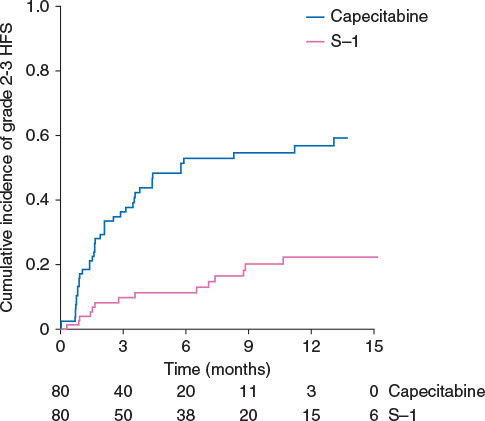
- Capecitabine vs S-1, with/without bevacizumab, 1st line mCRC
- N = 160, primary endpoint: incidence of HFS
- Starting dose capecitabine 1250 mg/m2 in 36%, 1000 mg/m2 in 64% of patients
- S-1 was started at 30 mg/m2 in all patients
Dutch SALTO study
cumulative incidence of grade 2-3 HFS
Kwakman J et al. Ann Oncol 2017
Dutch SALTO study
Overall incidence of grade ≥3 toxicities
Kwakman J et al. Ann Oncol 2017
|
Capecitabine |
S-1 |
|
| Hand-foot syndrome | 21% | 4% |
|
Diarrhea |
12% |
16% |
|
Anorexia |
3% |
13% |
|
Stomatitis |
3% |
3% |
| Nausea |
5% |
4% |
|
Vomiting |
4% |
3% |
| Dehydration | 4% |
0% |
| Fatigue | 8% |
10% |
|
Neutropenia |
0% | 0% |
|
Thrombocytopenia |
1% |
0% |
|
Pts requiring dose reductions |
66% |
40%3 |
2
p=0.03
1
2
p=0.003
1
Dutch SALTO study
Kwakman J et al. Ann Oncol 2017
Kwakman J et al. Clin Colorect Cancer 2019
Take-home message:
-
Incidence of HFS is usually underreported
Conclusions:
-
S-1 has a significantly lower incidence of HFS, also in Caucasian mCRC patients
-
No difference in median PFS and OS
-
Treatment with S-1 required less dose reductions
-
Incidence of HFS was higher compared to any previous RCT, probably because HFS was the primary endpoint
-
Even so, patients reported a higher incidence of HFS than physicians
HFS in colorectal cancer
HFS is usually treated locally and, when grade 2 or 3, with dose reduction or discontinuation of capecitabine/5-FU.1
Important issues:
-
Use of capecitabine/5-FU as maintenance treatment implies prolonged exposition to side effects: especially for elderly/frail patients the continuous exposure to grade 2 HFS may compromise daily functioning.
-
No data from trials on outcome of dose reductions on efficacy of treatment.
1. Kwakman JJM et al. Oncol Rev 2020
How important is the dose of capecitabine?
The incidence of HFS is dose-dependent.1
1. Cassidy J at al. Ann Oncol 2022; 2. Hofheinz R et al. Br J Cancer 2012; 3. Scheithauer W et al. J Clin Oncol 2003
In a systematic review of various cancer types, HFS was shown to be an independent predictor of survival.2
In a study investigating different schedules of capecitabine, a dose-intensified schedule showed the best results in terms of ORR and PFS.3
Together these data suggest that a higher dose of capecitabine may have better efficacy vs reduced dose.1,2,3
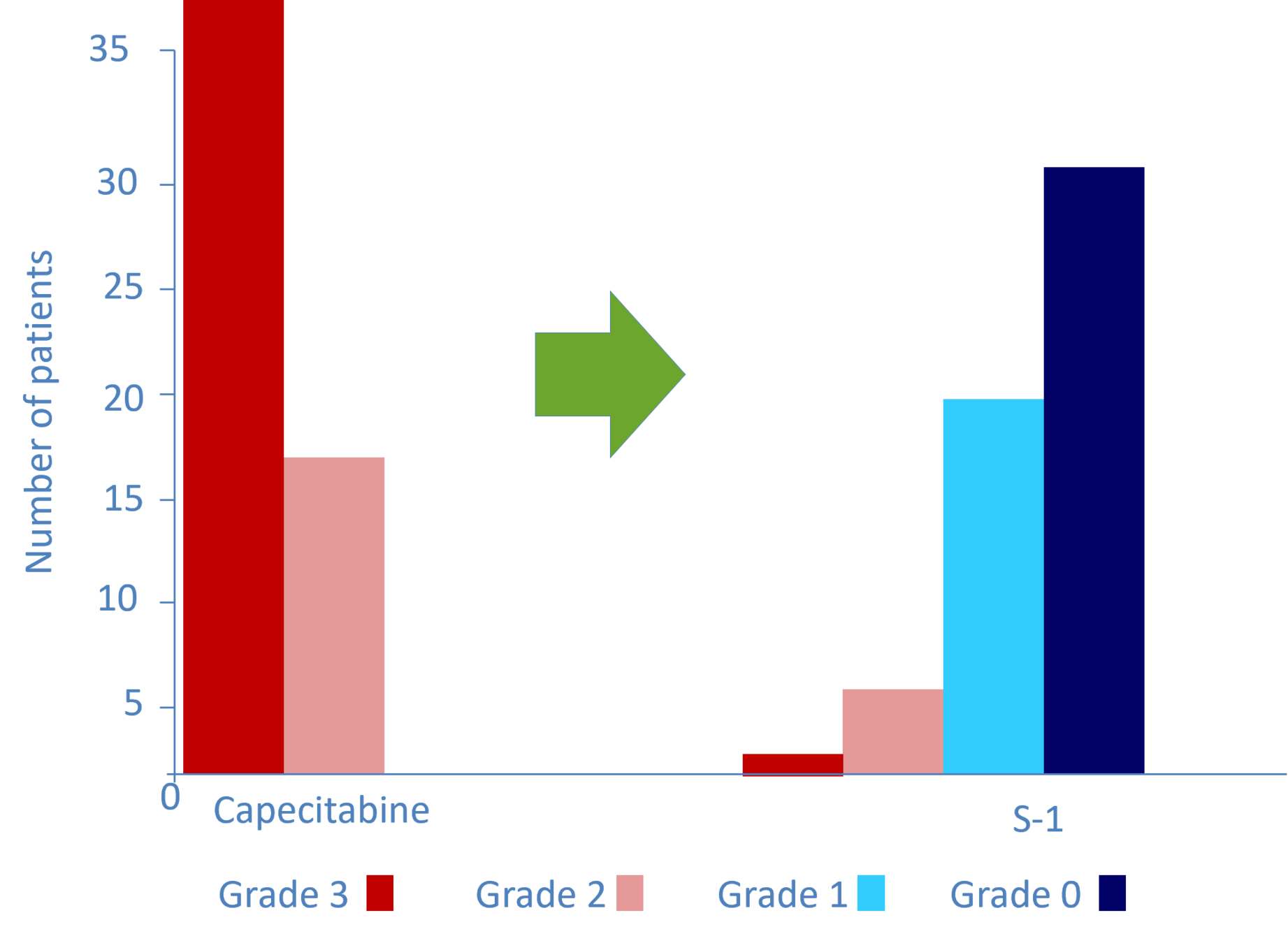
HFS before and after switch from capecitabine to S-1
Kwakman J et al. Acta Oncol 2017
-
In 33/52 patients (63%) S-1 was initiated without waiting for a decrease in HFS
-
In 28 of these patients (85%) HFS decreased within 2 cycles
experienced a lower grade of HFS upon switch
94%
56%
had complete resolution of HFS
Conclusions switching from capecitabine to S-1 due to HFS1,2
Two separate cohorts were identified (52 and 36 mCRC patients) who switched to S-1.
1. Kwakman J et al. Acta Oncol 2017; 2. Punt C et al. Clin Colorect Cancer 2022
In all patients the severity of HFS decreased or completely resolved during treatment with S-1.
Best results obtained in patients who started with S-1 when HFS had decreased to ≤ grade 1.
Other toxicities that occurred during S-1 treatment were either known fluoropyrimidine-related toxicities or related to bevacizumab, and all toxicities were reversible.
Median time from initiation of treatment with capecitabine to first documented progression of disease after initiation of treatment with S-1 was 414 days (95% CI 332-568).
Recommendation for use of S-1
in mCRC patients experiencing HFS
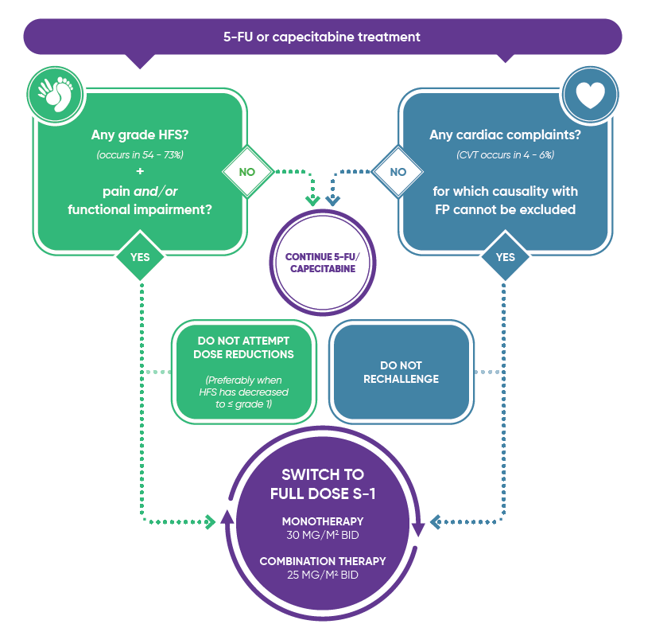
- In patients who experience pain and/or any functional impairment due to HFS during treatment with capecitabine or infusional 5-FU, a switch to S-1 at full dose (30 mg/m2 two times per day as monotherapy and 25 mg/m2 in combination therapy) is recommended without prior dose reduction of capecitabine/5-FU.
Punt C et al. ESMO Open 2023
- S-1 should preferably be initiated when HFS has decreased to grade 1, because earlier administration, albeit well tolerated, may be less effective in decreasing HFS-related symptoms in a minority of patients.
Recommendation for use of S-1
in mCRC patients experiencing CVT
- In patients who experience CVT during therapy with capecitabine or 5-FU and where causality with fluoropyrimidines cannot be excluded, a switch to S-1 at full dose (30 mg/m2 two times per day as monotherapy and 25 mg/m2 in combination therapy) is recommended without any attempt to rechallenge patients with capecitabine/5‑FU.
Punt C et al. ESMO Open 2023
Recommendations for use of S-1
Punt C et al. ESMO Open 2023
“In patients presenting with cardiotoxicity and/or hand-foot syndrome
on 5-FU or capecitabine-based chemotherapy, S-1 may be used as an alternative”


SPECIAL ARTICLE
Metastatic colorectal cancer: ESMO Clinical Practice Guideline for diagnosis, treatment and follow-up
A Cervantes, R Adam, S Roselló, D Arnold, N Normanno, J Taïeb, J Seligmann, T De Baere, P Osterlund, T Yoshino, E Martinelli, on behalf of ESMO Guidelines Committee;
Cervantes et al. AnnOncol 2023
ORIGINAL RESEARCH

Fluoropyrimidine-induced hand-foot syndrome and cardiotoxicity: recommendations for the use of the oral fluoropyrimidine S-1 in metastatic colorectal cancer
C. J. A. Punt, V. Heinemann, T. Maughan, C. Cremolini, E. Van Cutsem, R. McDermott, G. Bodoky, T. André, P. Osterlund,
A. J. Teske, P. PfeiffeR
Punt C et al. ESMO Open 2023
These slides were prepared by Prof. C.J.A. Punt (c.j.a.punt@umcutrecht.nl) in collaboration with Nordic Pharma. The copyright of the underlying data remains with the original owners. This material has been certified for promotional use. It may be shared internally exclusively with UK healthcare professional directly involved in the treatment of oncology patients. The content may not be copied, redistributed externally, or used in any inappropriate, promotional, or misleading context without prior written permission from the copyright holders.

Sign up to stay informed on Teysuno's latest scientific information
Stay informed